In today’s digital landscape, your website is often the first interaction people have with your brand. And in most cases, that journey begins with a search engine.
In fact, over 70% of online experiences start with a search, and more than 53% of all website traffic comes from organic search — making SEO one of the most powerful drivers of visibility and growth for any business.
But SEO isn’t just about ranking on Google. It’s about building a strong digital foundation that attracts the right audience, builds trust, and converts visitors into meaningful business opportunities.
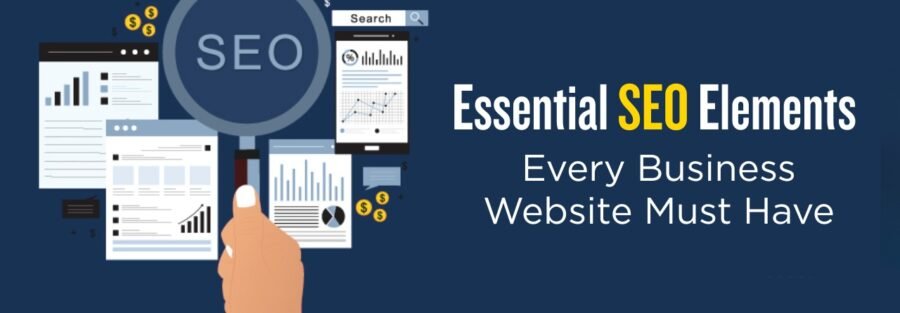
Let’s explore the essential SEO elements every business website must have.
- Strategic Keyword & Audience Research
Every successful SEO strategy begins with understanding your audience.
What are they searching for?
What problems are they trying to solve?
Targeted keyword research helps your business align its website content with real user intent. When your website speaks the same language as your potential customers, visibility and engagement naturally improve.
This matters because 93% of website traffic comes from search engines, and businesses that appear in relevant searches have a much higher chance of being discovered.
A consulting-led SEO approach ensures your keywords are not just popular — but purposeful and conversion-focused.
- High-Quality Content That Builds Authority
Content is still the foundation of effective SEO.
Search engines prioritize websites that offer helpful, relevant, and informative content.
Research shows:
- 72% of marketers say high-quality content is the most effective SEO tactic
- 71% of organizations now prioritize content marketing more than ever
Your business website should include:
- Clear service pages
- Insightful blogs
- FAQs
- Case studies
- Industry-focused thought leadership
Strategic content builds credibility and keeps visitors engaged longer — both of which improve search rankings and lead generation potential.
- Strong On-Page SEO Fundamentals
On-page SEO helps search engines understand what your website is about.
Without proper structure, even great content may never rank.
Every page on your website should include:
- Optimized titles and meta descriptions
- Clear heading structure (H1, H2, H3)
- Internal linking between pages
- Image alt text
- Clean, readable URLs
These elements improve both search visibility and user experience.
Why does this matter? Because the top 5 search results receive nearly 69% of all clicks, while only 0.78% of users visit the second page of Google.
If your website isn’t optimized, it simply won’t be seen.
- Mobile-Friendly & Fast Website Experience
User experience is now a core ranking factor.
Search engines prioritize websites that load quickly and perform well across devices.
Consider this:
- Mobile devices account for over 60% of global web traffic
- A slow or poorly designed mobile site can significantly increase bounce rates
A well-optimized website should be:
- Mobile responsive
- Fast loading
- Easy to navigate
- Visually clean
SEO today is not just technical — it’s experiential. A seamless experience keeps visitors engaged and improves conversion chances.
- Technical SEO & Website Health
Technical SEO ensures your website is accessible and understandable to search engines.
Even strong content cannot perform if your site has technical issues.
Essential technical elements include:
- Secure website (HTTPS)
- Fast loading speed
- XML sitemap
- Proper indexing
- Structured data
- Error-free pages
Interestingly, 96.55% of web pages receive no traffic from Google, often due to poor optimization or technical gaps.
This highlights why technical SEO is not optional — it’s foundational.
- Local SEO & Search Visibility
For service-based and location-driven businesses, local SEO plays a critical role.
It ensures your brand appears when nearby customers search for relevant services.
Key practices include:
- Optimized Google Business profile
- Location-based keywords
- Customer reviews
- Accurate contact details
With more users searching for services “near me,” local SEO directly influences inquiries and footfall.
- Conversion-Focused SEO Strategy
Traffic alone is not the goal — conversions are.
Your website must guide visitors toward action once they arrive.
This includes:
- Clear calls-to-action
- Lead forms
- Consultation booking options
- Downloadable resources
SEO-generated leads have a 14.6% close rate compared to just 1.7% for outbound leads, making SEO one of the most cost-effective lead generation channels.
When SEO and conversion strategy work together, your website becomes a business development tool — not just an information platform.
- Consistent Monitoring & Optimization
SEO is not a one-time task. It’s an ongoing process.
Algorithms change, user behavior evolves, and competition grows.
Regular monitoring helps you:
- Track traffic and rankings
- Improve underperforming pages
- Update outdated content
- Stay aligned with search trends
Businesses that treat SEO as a long-term strategy see stronger, more sustainable growth over time.
The Cogniferentials Consulting Perspective
At Cogniferentials Consultancy, we believe SEO is not just about rankings — it’s about relevance, visibility, and business growth.
A strategic SEO approach ensures your website:
- Attracts the right audience
- Builds credibility
- Generates qualified leads
- Supports long-term brand positioning
Because in today’s competitive digital ecosystem, a well-optimized website isn’t just an advantage — it’s a necessity.
Conclusion
SEO is the backbone of a strong digital presence.
With the right elements in place, your website can become a consistent source of visibility, trust, and growth.
When supported by strategy, data, and meaningful content, SEO transforms your website into more than just an online platform —
It becomes a powerful engine for sustainable business success.